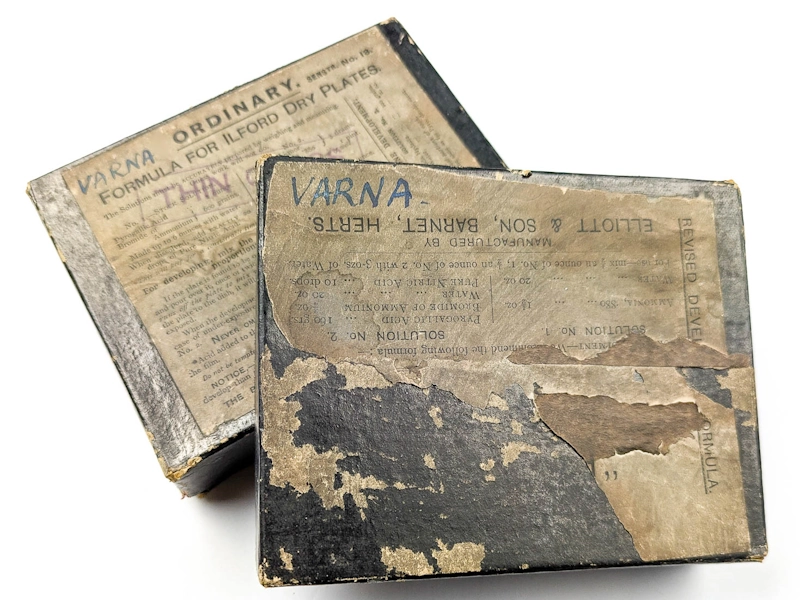
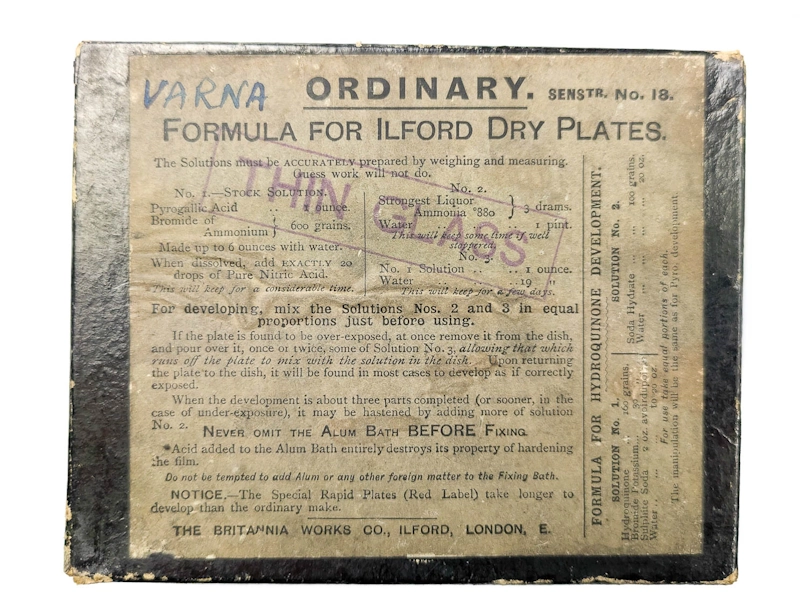
In mid-October, we unexpectedly received an email from a gentleman named John Rae, asking us if we could verify the images attached. It seems he had stumbled upon an old box of glass plates from the 19th Century that he believes could be related to Varna as they were found stored in the basement at his mother’s house for years with a note in bold pen saying “VARNA”.
John understands that his maternal great-grandfather, John T Henthorne, was a building surveyor by trade, a director of various cotton mills in Oldham, Lancashire, and an enthusiastic photographer. It stands to reason that he was probably tasked with surveying and reporting on the ongoing construction developments in Varna back in 1899. Thus, he more than likely embarked on his journey by boat and train, eager to witness and capture the unfolding progress with his trusty camera in hand.
By a fortunate twist of fate, John teaches photography at UCA University in Farnham, has harnessed the university’s resources to scan the glass negative plates, resulting in a remarkable collection of positive images.
The images
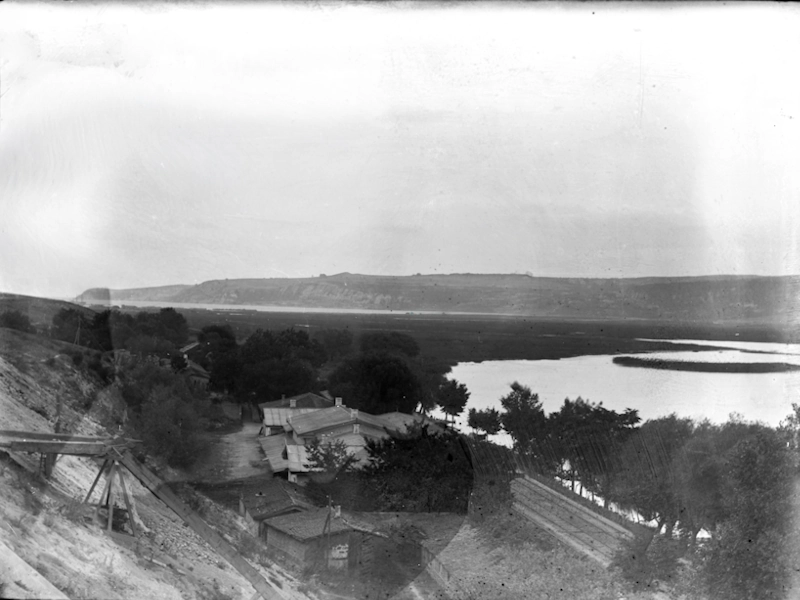
In total, we have twenty-three mixed results, predominantly positive, though a couple seem to be double exposures. This results in one ethereal image layered over another, which certainly invites intriguing analysis.
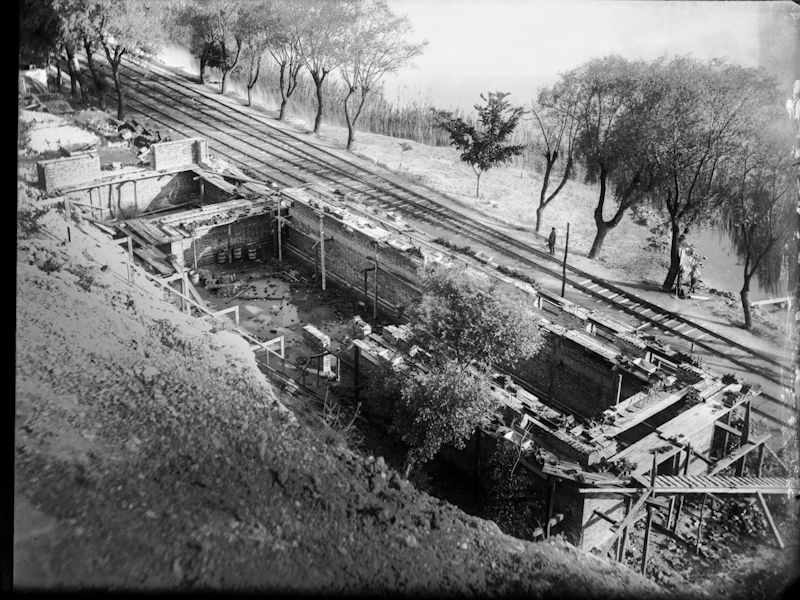
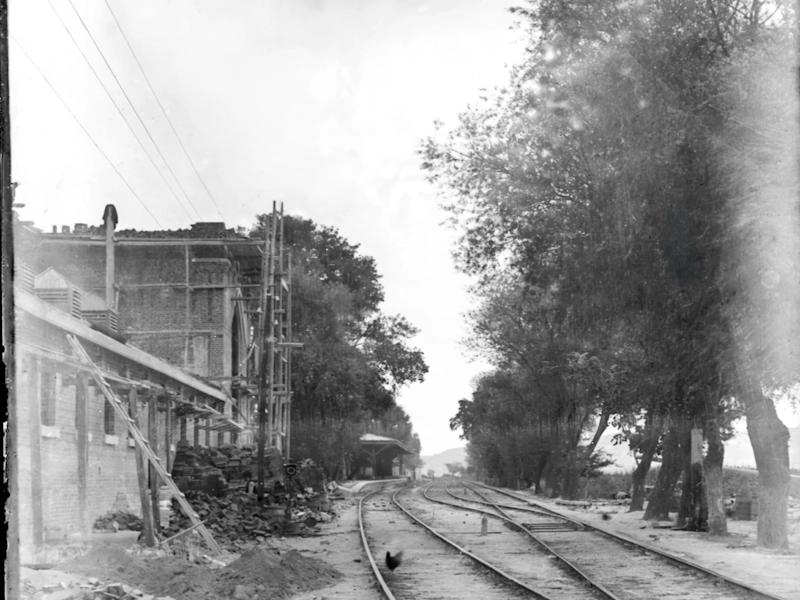
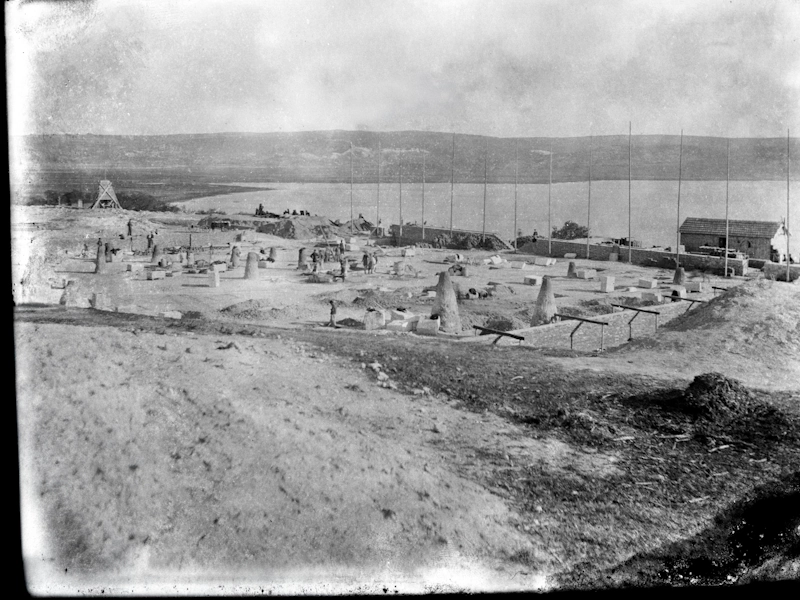
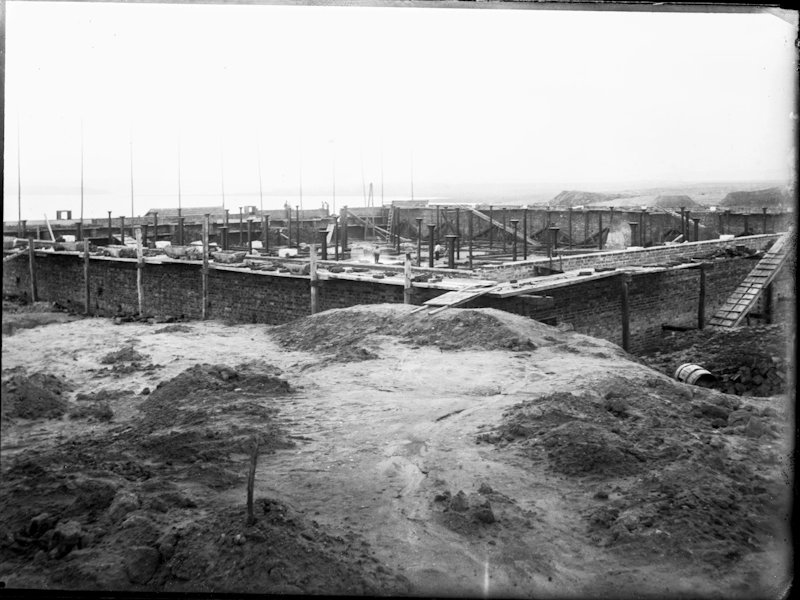
Upon closer examination of the satisfactory images, we have successfully matched six of them with the construction of the Prince Boris Clothing Factory from 1898.
This project features a blend of fundamental footings and groundwork, alongside the initiation of the London brick, all transported from the UK, likely via one of the earliest steam deliveries straight to Varna by sea.
The images clearly show that the train line was positioned at the base of the slope, and just a bit further along the track, you can discern Varna Station. Another point to note is the implementation of wrought or cast-iron supports being installed for the subsequent level.
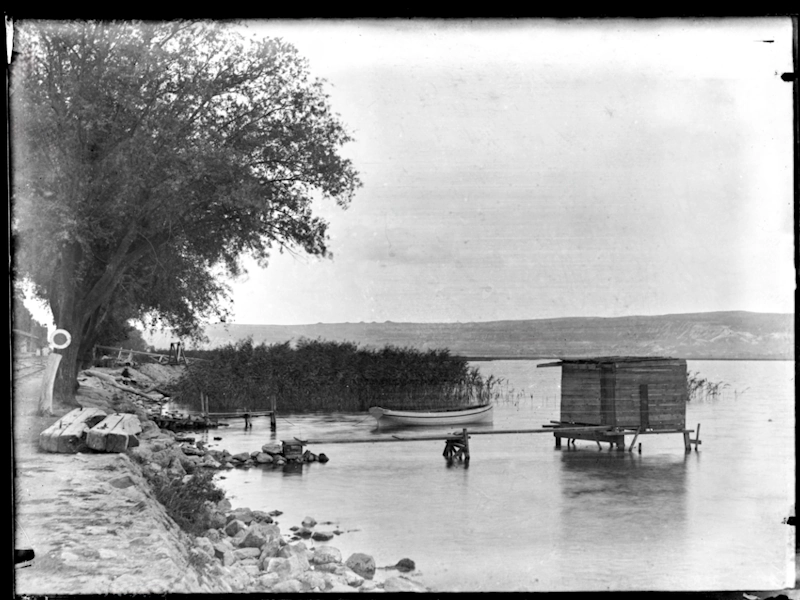
It’s evident that Varna Lake is just a stone’s throw away, but today, those tracks have shifted significantly onto reclaimed land, making way for the major highway leading to Burgas.
In summary
A noteworthy discovery regarding the factory’s development that provided jobs for more than 400+ civilian workers in the early 20th century.
This means we have about seventeen more plates to explore and feature in upcoming blog posts.
Sorry not available at this time.