Ref Number: 222

Queen Eleonore's Lost Children's Sanatorium for Children
Ref Number: 222
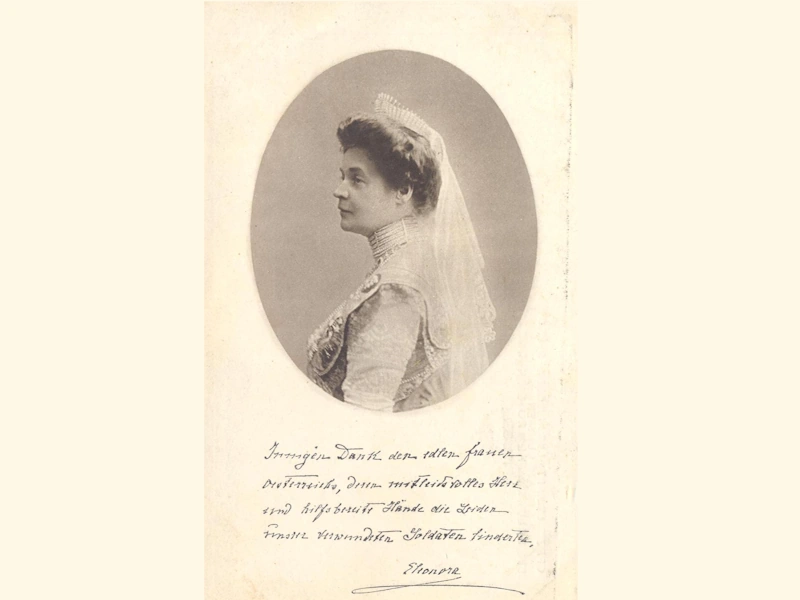
Eleonore Caroline Gasparine Louise Reuss-Köstritz, born on 22 August 1860 and passing on 12 September 1917, held the title of Tsaritsa of Bulgaria as the second spouse of Tsar Ferdinand I.
She was also a member of the venerable House of Reuss by lineage. In the wake of his first wife’s passing, Marie Louise of Bourbon-Parma, Tsar Ferdinand pursued a new spouse to fulfill the ceremonial responsibilities expected of a consort to a sovereign leader. Ferdinand, having fulfilled his obligations to produce heirs, conveyed to his assistant his desire for a bride who would not seek affection or attention.
After careful consideration, the pool of candidates was narrowed to Eleonore, who then entered into matrimony with Ferdinand. Their union was celebrated with a Catholic ceremony on 28 February 1908 at St. Augustine’s Church in Coburg, followed by a Protestant ceremony on 1 March 1908 at Osterstein Castle, the estate of the Reuss family.
Originally known as Princess of Bulgaria, Eleonore adopted the title of Tsaritsa (“Queen”) on 5 October 1908, coinciding with Bulgaria’s proclamation of independence from the Ottoman Empire.
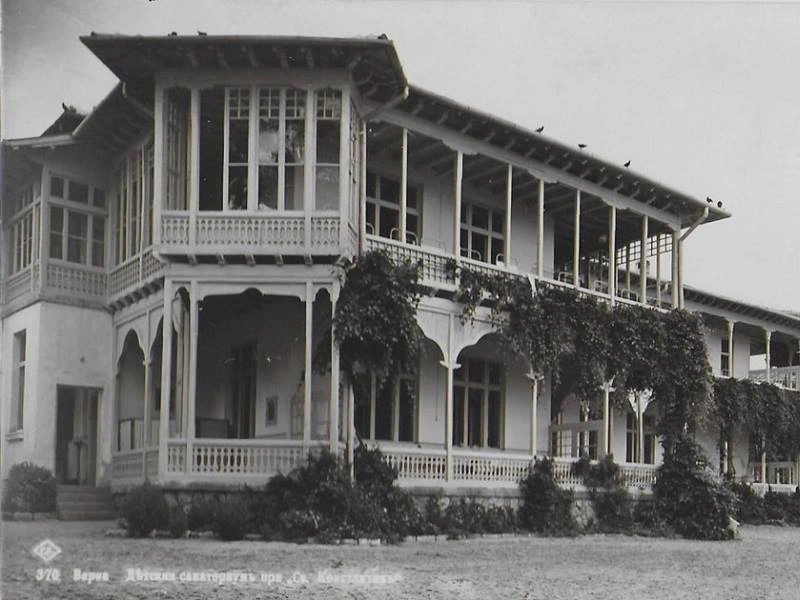
With her compassionate nature and nurturing spirit, Eleonore swiftly endeared herself to Ferdinand’s stepchildren and garnered the affection of the entire Bulgarian populace. The primary endeavor of Queen Eleonore, in her role as the consort of the sovereign, revolved around charitable pursuits. Among her initial endeavors was the generous act of donating the 150,000 leva bestowed upon her by the Council of Ministers as a wedding gift. The total sum was allocated for the construction of a sanatorium dedicated to the care and treatment of children suffering from bone tuberculosis in the vicinity of Varna. During its era, it stood as the most significant of its type on the Balkan Peninsula. A notable contributor to the establishment of the sanatorium was the renowned Varna physician and civic leader, Prof. Dr. Paraskev Stoyanov.
The sanatorium found its place in a particularly scenic area along the Bulgarian Black Sea coast, in close proximity to the monastery of St. Constantine and the Euxinograde palace. The structures of the sanatorium, enveloped in lush vegetation, were situated approximately 40-50 meters from the shoreline and were distinguished by their unique Bulgarian monastery architectural style. The structures rose two stories, oriented towards the southwest and the sea, adorned with expansive Bulgarian verandas—terraces designed for sunbathing. The bedrooms were ample in size, featuring lofty ceilings, abundant brightness, and a generous flow of air complemented by soft, diffused light. Each dormitory featured its own distinct washroom, complete with enameled washbasins that provided both hot and cold water, alongside contemporary toilets. Central heating, contemporary water supply and sewage systems, showers, private electrical installations, disinfection services, and other amenities.
Adjacent to the primary structure of the sanatorium lay a meticulously designed park, adorned with an array of ornamental trees and shrubs, featuring several groves of both pine and deciduous varieties.
Young individuals who have undergone treatment at the sanatorium are provided with appropriate physical education, develop health and hygiene practices, and are instructed in basic cleanliness, physical conditioning, and manual labour.
The sanatorium met its demise during the era of the communist regime.

We have put together a staff of first-rate, well-informed tour guides to help you discover the city.